
Atlantic Cod | Atlantic Ocean Marine Life Guide
Atlantic cod facts reveal the story of one of the most historically important fish in the Atlantic Ocean. For centuries, Atlantic cod supported coastal communities, shaped global trade, and played a vital role in marine ecosystems. Today, this species remains both ecologically significant and culturally iconic.
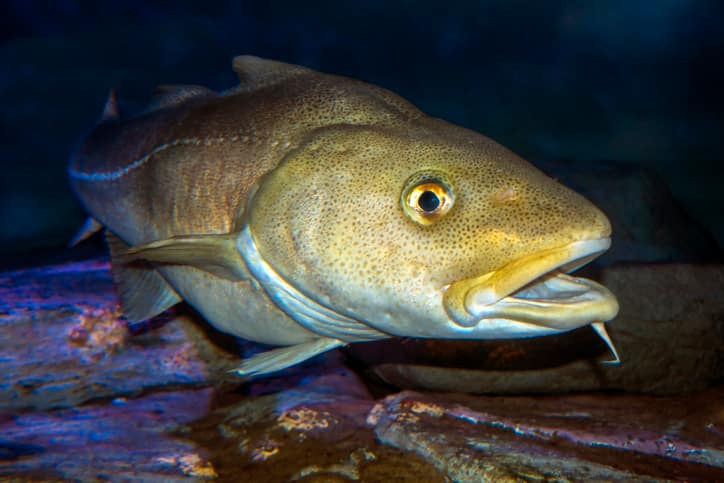
Found throughout the cold and temperate waters of the Atlantic Ocean, Atlantic cod are bottom-dwelling fish known for their whisker-like chin barbel and mottled coloring. Beyond their commercial value, they are key predators in coastal waters and an important part of the ocean food web.
Found throughout the cold and temperate waters of the Atlantic Ocean, Atlantic cod are bottom-dwelling fish known for their whisker-like chin barbel and mottled coloring. Beyond their commercial value, they are key predators in coastal waters and an important part of the ocean food web.
Quick Facts
- Scientific name: Gadus morhua
- Average size: 24–51 inches
- Weight: 10–25 pounds (large individuals can exceed 75 pounds)
- Lifespan: Up to 25 years
- Diet: Fish, crustaceans, worms, and mollusks
- Habitat: Cold, temperate coastal waters and continental shelves
- Conservation status: Vulnerable (varies by stock)
WHERE DOES THE ATLANTIC COD LIVE?
Atlantic cod are native to the northern Atlantic Ocean, where they inhabit cold, nutrient-rich waters. They are commonly found along continental shelves, especially in productive coastal waters that support abundant prey species.
Habitat & Range Breakdown
- Primary Atlantic regions:
Northwestern Atlantic (Canada, New England), Northeastern Atlantic (Iceland, Norway, North Sea) - Coastal vs open ocean:
Primarily coastal waters and continental shelf regions; rarely far offshore - Typical depth range:
20–600 feet, though they can reach depths over 1,500 feet - Preferred water temperature:
32–50°F (0–10°C) - Migration behavior:
Seasonal migrations between feeding grounds and spawning areas
WHAT DOES THE ATLANTIC COD EAT?
Atlantic cod are opportunistic carnivores that feed near the seafloor. Their diet shifts as they grow, allowing them to exploit a wide range of prey species.
Diet Breakdown
- Primary prey:
Herring, capelin, sand eels, shrimp, crabs, worms, and mollusks - Hunting or feeding strategy:
Slow-moving bottom foragers that detect prey using sensory organs - Key adaptations:
Chin barbel for detecting food; strong jaws and sharp teeth - Role in food chain:
Mid-to-top-level predator in many North Atlantic ecosystems
BEHAVIOR AND UNIQUE CHARACTERISTICS
Atlantic cod are adaptable, schooling fish that adjust their behavior based on age, season, and environmental conditions. Their life cycle is closely tied to seasonal temperature shifts and food availability.
Trait Highlights
- Social Behavior:
Often form schools, especially during migration and spawning - Reproduction:
Females can release millions of eggs during spawning season - Speed or Mobility:
Moderate swimmers capable of short bursts of speed - Physical Adaptations:
Distinct chin barbel; three dorsal fins; mottled brown or green coloration for camouflage - Unique Survival Traits:
Highly sensitive lateral line system to detect vibrations

WHERE TO SEE THE ATLANTIC COD IN THE ATLANTIC OCEAN
Region: North America
The strongest remaining Atlantic cod populations in North America are found in cold northern waters. These regions offer some of the best opportunities to understand the species within its natural ecosystem.
Newfoundland and Labrador (Canada)
- Best season: Late spring through early fall
- Viewing experience: Recreational fishing excursions and marine eco-tours
- Why sightings occur here: Cold Labrador Current supports rich feeding grounds
- Best season: Summer to early fall
- Viewing type: Deep-sea fishing charters
- Environmental factors: Productive continental shelf ecosystem with abundant prey
CONSERVATION STATUS
Atlantic cod populations have experienced significant declines over the past century due to overfishing and environmental change. Some stocks remain vulnerable despite recovery efforts.
- Population trend:
Historically depleted; partial recovery in certain regions - Primary threats:
Overfishing, bycatch, habitat degradation - Climate impact:
Rising ocean temperatures shift suitable habitat northward - Fishing or human pressures:
Industrial trawling historically reduced spawning populations - Marine protections:
Fishing quotas, seasonal closures, and stock management programs
INTERESTING FACTS ABOUT THE ATLANTIC COD
- Atlantic cod helped fuel the economy of early North American colonies.
- They can change color slightly to blend with different seabeds.
- A single large female may release up to 5 million eggs in one spawning season.
- Cod have been found in waters just above freezing temperatures.
- Their lateral line system allows them to sense even subtle underwater vibrations.
- Dried and salted cod became a major global trade commodity for centuries.
Frequently Asked Questions About the Atlantic Cod
Most Atlantic cod measure between 2 and 4 feet long. Exceptional individuals can exceed 6 feet and weigh more than 75 pounds.
Intensive commercial fishing throughout the 20th century severely reduced spawning populations. Slow recovery rates and environmental changes have made rebuilding stocks challenging.
No. Atlantic cod (Gadus morhua) and Pacific cod (Gadus macrocephalus) are closely related but live in different oceans and have slightly different biological traits.
Yes. Many populations migrate seasonally between feeding areas and spawning grounds along the continental shelf.
Seals, larger fish, and some shark species prey on cod. Juveniles are especially vulnerable to predation.
Yes, but under strict management in many regions. Quotas and monitoring programs aim to prevent further population collapse.
Discover Life Beneath the Atlantic Ocean
From iconic marine species to the habitats that sustain them, explore the incredible life that makes the Atlantic Ocean one of the world’s most dynamic ecosystems.