
Blue Whale | Atlantic Ocean Marine Life Guide
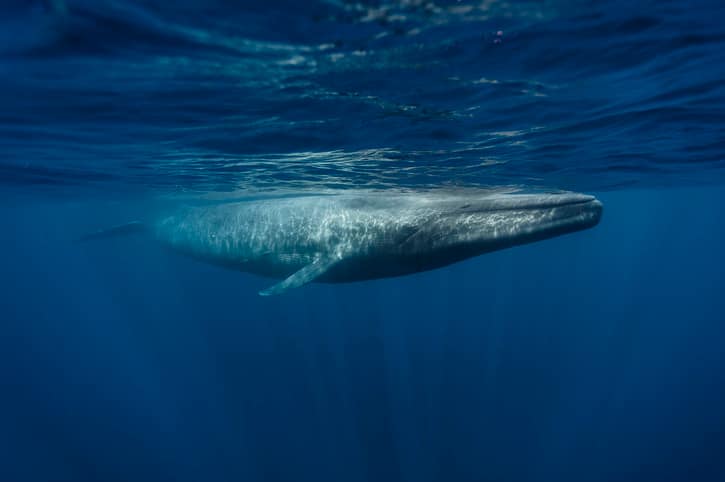
Blue whales in the Atlantic Ocean are the largest animals ever known to have lived on Earth. These massive marine mammals travel thousands of miles across open ocean waters, moving between feeding and breeding grounds. Despite their enormous size, they feed on tiny prey and rely on some of the most productive ecosystems in the Atlantic.
As top filter feeders, blue whales play an essential role in maintaining healthy ocean systems. Their migrations connect polar feeding areas with warmer tropical waters, helping cycle nutrients across vast distances. Seeing or even knowing they exist beneath the surface gives the Atlantic Ocean a sense of true scale and wonder.
As top filter feeders, blue whales play an essential role in maintaining healthy ocean systems. Their migrations connect polar feeding areas with warmer tropical waters, helping cycle nutrients across vast distances. Seeing or even knowing they exist beneath the surface gives the Atlantic Ocean a sense of true scale and wonder.
Quick Facts
- Scientific name: Balaenoptera musculus
- Average size: 70–100 feet
- Weight: 100–200 tons
- Lifespan: 70–90 years
- Diet: Primarily krill
- Habitat: Open ocean and deep coastal waters
- Conservation status: Endangered (IUCN)
WHERE DO BLUE WHALES LIVE?
Blue whales inhabit vast stretches of the Atlantic Ocean, favoring deep offshore waters but also appearing in productive coastal regions during feeding seasons. They are highly migratory and move seasonally between cold feeding grounds and warmer breeding areas.
Their presence in both deep offshore waters and certain coastal waters highlights the importance of protecting large marine corridors. Blue whales depend on intact Atlantic ecosystems across multiple countries and ocean basins.
Habitat & Range Breakdown
- Primary Atlantic regions: North Atlantic from the eastern coast of North America to Europe and west Africa
- Coastal vs open ocean: Mostly open ocean, but seasonally near coastal upwelling zones
- Typical depth range: Surface to over 1,000 feet while diving
- Preferred water temperature: Cold, nutrient-rich waters for feeding; warmer tropical waters for breeding
- Migration behavior: Long-distance seasonal migrations between high-latitude feeding grounds and lower-latitude breeding areas
Their presence in both deep offshore waters and certain coastal waters highlights the importance of protecting large marine corridors. Blue whales depend on intact Atlantic ecosystems across multiple countries and ocean basins.
WHAT DO BLUE WHALES EAT?
Blue whales are baleen whales and specialized filter feeders. Although they are the largest animals on the planet, their diet consists almost entirely of small shrimp-like crustaceans known as krill.
By consuming and redistributing nutrients through waste, blue whales contribute to what scientists call the “whale pump.” This process enhances productivity in the Atlantic Ocean and supports broader marine food webs.
Diet Breakdown
- Primary prey: Krill
- Hunting or feeding strategy: Lunge feeding through dense krill swarms with open mouths
- Key adaptations: Baleen plates that filter water and trap prey; expandable throat pleats
- Role in food chain: Top-level filter feeder influencing plankton and krill populations
By consuming and redistributing nutrients through waste, blue whales contribute to what scientists call the “whale pump.” This process enhances productivity in the Atlantic Ocean and supports broader marine food webs.
BEHAVIOR AND UNIQUE CHARACTERISTICS
Blue whales are generally solitary or found in small, loosely associated groups. They communicate across vast distances using low-frequency vocalizations that can travel for hundreds of miles underwater.
Trait Highlights
- Social Behavior: Usually solitary or in pairs; not tightly grouped
- Reproduction: Females give birth to a single calf every 2–3 years after about 11–12 months of gestation
- Speed or Mobility: Can reach speeds of 20–30 mph in short bursts
- Physical Adaptations: Streamlined body, small dorsal fin, massive heart weighing as much as a small car
- Unique Survival Traits: Extremely loud calls used for communication across ocean basins

WHERE TO SEE BLUE WHALES IN THE ATLANTIC OCEAN
Region: North America
North America offers some of the most reliable opportunities to see blue whales in the Atlantic Ocean. Seasonal feeding areas along the northeastern coast provide nutrient-rich conditions that attract krill and, in turn, these giants.
Gulf of Maine
- Best season: Summer through early fall
- Viewing experience: Offshore whale-watching tours
- Why sightings occur here: Strong upwelling and cold-water currents support dense krill populations
- Best season: Late summer
- Viewing type: Boat-based tours from coastal communities
- Environmental factors: Mixing of Arctic and Atlantic waters increases productivity
CONSERVATION STATUS
Blue whales are classified as Endangered by the International Union for Conservation of Nature (IUCN). Commercial whaling in the 20th century drastically reduced their global population.
- Population trend: Slowly increasing but still far below historic numbers
- Primary threats: Ship strikes, entanglement in fishing gear
- Climate impact: Changing ocean temperatures affecting krill distribution
- Fishing or human pressures: Noise pollution from shipping and industrial activity
- Marine protections: International whaling bans and marine protected areas
INTERESTING FACTS ABOUT BLUE WHALES
- A blue whale’s heart can weigh over 400 pounds.
- Their calls are among the loudest sounds made by any animal.
- They can dive for 10–20 minutes while feeding.
- A calf can drink over 100 gallons of milk per day.
- Their tongues alone can weigh as much as an elephant.
- Despite their size, they are graceful and streamlined swimmers.
FREQUENTLY ASKED QUESTIONS ABOUT BLUE WHALES
Blue whales are the largest whale species and the largest animals ever recorded in Earth’s history. They are significantly larger than humpback and fin whales, both in length and weight.
Blue whales typically live between 70 and 90 years. Scientists estimate age by examining earwax layers and other biological markers.
Blue whales are not aggressive toward humans. They are gentle giants that feed on krill and pose no threat to boats or swimmers under normal circumstances.
Blue whales were heavily hunted during the industrial whaling era for their oil and baleen. Their massive size made them especially valuable targets before international bans were enacted.
Yes, blue whales migrate annually between cold feeding grounds and warmer breeding areas. These long journeys can span thousands of miles across the Atlantic Ocean.
Estimates suggest that global populations number in the low tens of thousands. While numbers are improving compared to historic lows, they remain far below pre-whaling levels.
Discover Life Beneath the Atlantic Ocean
From iconic marine species to the habitats that sustain them, explore the incredible life that makes the Atlantic Ocean one of the world’s most dynamic ecosystems.